Law, trust and human judgement at the heart of justice
Chief Justice Richard Niall shares unique insights into judicial leadership, institutional trust, diversity on the bench and why human judgment remains central to the law.
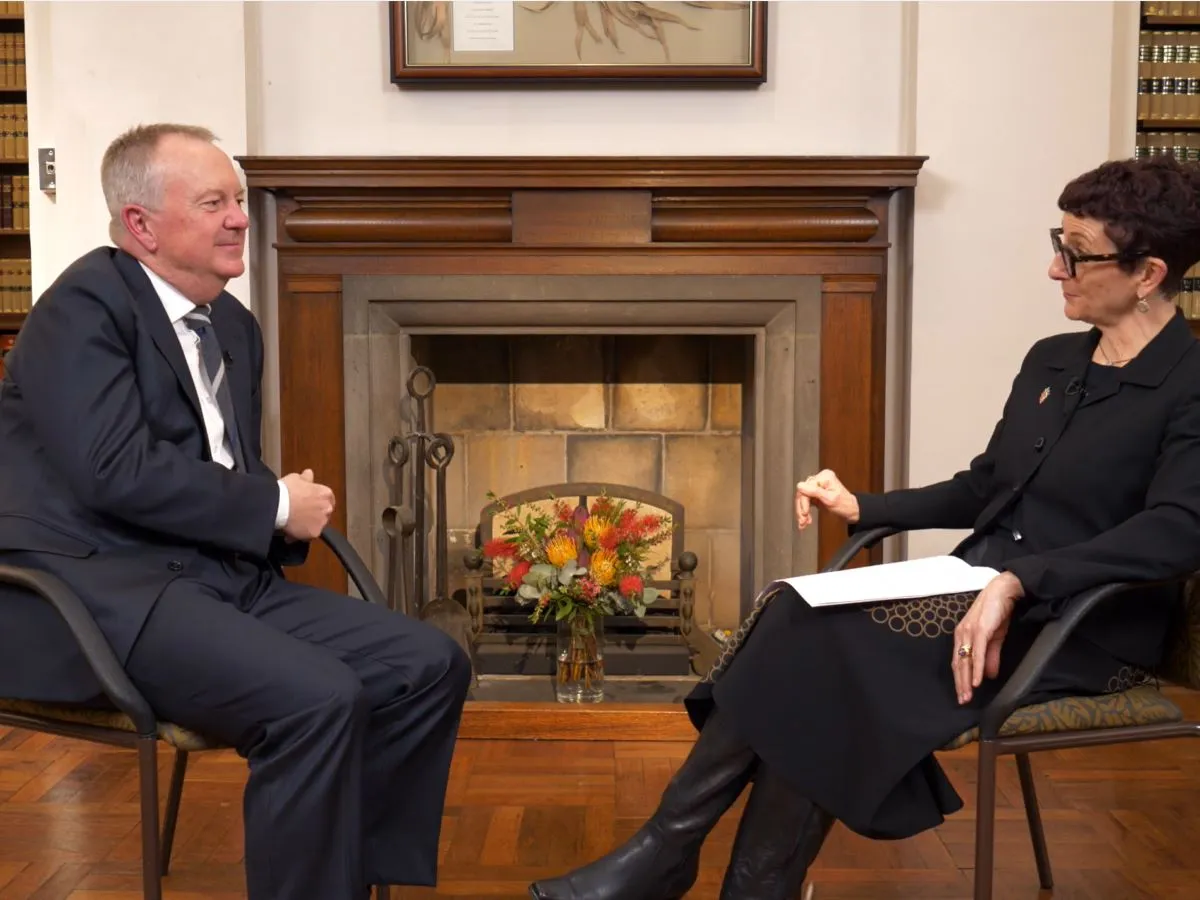
Getting insights into the thinking and style of leaders of the justice system is always revealing. Courts, Community and Confidence: A conversation with the Chief Justice, did just this with Chief Justice Richard Niall, of the Supreme Court of Victoria.
The discussion explores the law’s role in our community and the pressures shaping justice today, offering timely reflections on leadership, public confidence, access to justice and the irreplaceable human dimension of the judiciary
Chief Justice Niall described his approach to leadership as one of stewardship rather than direction. Judicial independence remains foundational, but the Chief Justice’s role, he said, is defined by collegiality, respect and unity of purpose.
“You're not telling judges how to decide cases. You're trying to create an environment of excellence.”
Drawing on the tone set by his predecessor, Chief Justice Anne Ferguson, he emphasised continuity, professionalism and culture as critical enablers of fair and effective decision- making.
“Each judge is very independent. That's what we like. That's what we want, that's what we need.”
That culture extends beyond the courtroom to leadership roles across the justice system, including Courts Council, the Judicial Commission and the Judicial College. These functions may be largely unseen, but they are essential to the courts’ ability to serve the public well. As Chief Justice Niall reflected, trust in institutions is built not only through outcomes, but through consistency and transparency over time.
“We've got to be sure that the people understand what these institutions stand for, what they do, what their strengths are and what their weaknesses are.”
A strong theme of the conversation was diversity within the judiciary. The Chief Justice reflected on the significant cultural shift that has accompanied greater gender balance on the Supreme Court bench, while being clear that diversity strengthens deliberation and judgement.
“You need some creative tension. You need different perspectives. You need not everyone agreeing the same way.”
He acknowledged progress, while also recognising the ongoing challenge of ensuring the judiciary reflects the full breadth of the community it serves.
Central to public trust is understanding. In a period of heightened scepticism towards institutions, Chief Justice Niall argued that courts have an important role in proactive engagement. This includes explaining what they do, how they operate, and why they matter. Communication, he said, should not be merely reactive or crisis driven, cautioning that while institutions must be open to critique, society must also understand what is at stake if trust erodes without replacement.
“I've got an important role in engaging with the community, in supplying information or context for a lot of the work that we do.”
Questions of access to justice featured prominently. Lynne drew on VLF research showing that many people either do not recognise the legal dimensions of their problems or feel unable to seek help. Chief Justice Niall pointed to growing awareness within courts that many matters are driven by complex, intergenerational social issues. He highlighted the critical role of legal aid and community legal centres, while acknowledging the scale of unmet need, particularly in civil law.
The conversation also addressed the impact of technology and artificial intelligence. While inevitably transformative, AI cannot replace judicial reasoning.
“You can’t really replace fact finding and decision making by mathematical formula.”
Early pilots, such as in the Coroner’s Court, show promise in assisting synthesis and efficiency, but human judgement remains central to ensure discretion, context and fairness.
Throughout the discussion, Chief Justice Niall returned to the core value of objectivity. Like medicine, law requires empathy without partiality. Courts, like hospitals, serve people often under stress, relying on professionalism, independence and clarity.
“As a lawyer, objectivity is a really important part. So, it's not about defending a person, a guilty person. It's really about ensuring that the system can work.”
The In Conversation series brings thoughtful discussions with leading legal minds into the public sphere. By going beyond headlines to explore the values and experiences shaping our courts we can deepen our understanding of the people and principles that sustain it.
Watch the full conversation
Publications
Subscribe to our Newsletter
An editorial from Dr Rebekah Farrell, Executive Director, Victoria Law Foundation.

Helping young people overcome some of the barriers on their way to achieving Australian citizenship.

Through the reflections of colleagues, collaborators and friends, this we celebrate Dr Hugh McDonald's extraordinary contribution to access to justice and the enduring influence of his ideas on research, policy and practice.
Respond to legal need
Major Grants offer up to $100,000 for civil legal projects that help organisations better understand and support the legal needs and capabilities of Victorians.