How much legal is enough?
Our recent Research Network webinar explored legal dosage including the right level and mix of help, and how this idea can support better service design.
Finding the right level of help
How much legal help does a person need to understand their issue, take the next step or resolve a problem? Sometimes the answer is a short, clear piece of information. Sometimes it is advice, representation, casework, social support or a mix of these things.
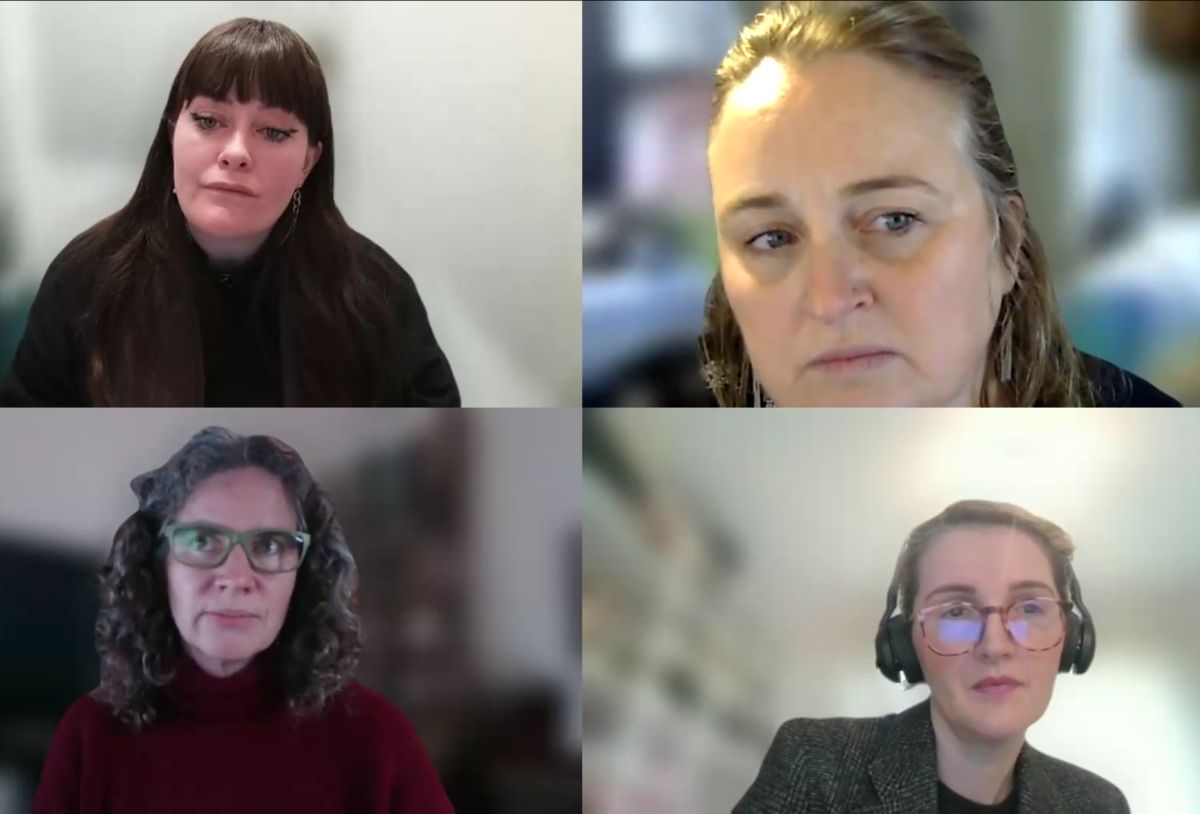
Our recent Research Network webinar, How much legal is enough? Exploring the dosage question, explored what dosage means for legal help. VLF's Bridget McAloon moderated the conversation, with Ajsela Siskovic from InTouch, Melanie Saunders from Justice Connect and Katie Fraser from Youthlaw each looking at dosage from a different angle.
What dosage means for legal help
Dosage is borrowed from health. In this context, it means the amount and type of legal help someone receives. In legal assistance, it puts the person at the centre and asks: what level and mix of support is enough to help someone progress their legal issue? It does not assume that every person needs the most intensive service or that lower-intensity support, such as information, referrals or self-help tools, is always enough. It asks services to think carefully about the level of support, timing and combination.
Designing support around need
To begin, Bridget connected this idea to VLF’s Measure for Measure research. The report found that Victorian initiatives provide support across a broad spectrum, from information, education and self-help through to advice, representation and integrated casework, where legal and other support are provided together. But we still need stronger evidence about what types, levels and combinations of support work best, for whom and in what circumstances.
This is where dosage becomes useful for service design. It shifts the focus from moving people along a fixed pathway to asking what they need now, what they may need next, and how services can make transitions between levels of help clearer and safer.
“It boils down, as always, to getting the right help in the right way at the right time.”
Bridget McAloon, Victoria Law Foundation
Information that builds confidence
Ajsela Siskovic shared InTouch’s Legal Pathways to Recovery project, which used regular webinars to provide migrant and refugee women experiencing family violence with accessible legal information. The design was simple and careful and consisted of one-hour sessions, lawyer-led content, plain language, case studies, frequently asked questions and technology-based translations.
The insight was not just that legal information can help. It was that the right dose of information, delivered in a trusted and culturally safe way, can build knowledge, confidence and a stronger sense of control. For some people, it helped them take practical steps. For others, it made later legal advice more useful because they arrived with more context and less uncertainty.
“The idea is that the right amount of information can really empower even the most vulnerable people in our society.”
Ajsela Siskovic, InTouch
Online support and readiness to act
Melanie Saunders took the dosage question into online self-help. Justice Connect has been exploring how digital resources can help people at scale, while recognising that online support will not suit everyone. The research found that confidence matters. Usability is important, but it is not always enough. If a resource helps someone understand their issue but leaves them unsure what to do next, the dose may fall short.
Melanie’s work suggests that confidence can be designed for and measured. That gives services a practical way to improve lower-intensity support and a useful bridge between research and action.
“Confidence gives us a metric that we can capture at the point of use, but that also tells us a lot about the likelihood of achieving outcomes.”
Melanie Saunders, Justice Connect
Balancing depth and reach
Katie Fraser brought a connected view from Youthlaw. She described the tension between depth and breadth. High-dose services, such as intensive legal and social work support, can be life-changing for young people with complex needs. But they reach fewer people. Lower-dose services, such as information, referrals and advice lines, reach more people, yet their outcomes are often less well understood.
For service leaders, this raises hard but important questions. What should be preserved? What should be scaled? Where is the evidence strong, and where are we relying on assumptions? Katie’s message was clear: keep asking what works.
“Just keep asking what works, because if we don't know, we can't make some of those strategic decisions.”
Katie Fraser, Youthlaw
From insight to action
The discussion also widened dosage beyond legal help itself. Participants asked about the right doses of trust, safety, confidence and support. These factors shape whether people can use legal information at all. They can be built through plain language, realistic scope, cultural safety, feedback loops and clear pathways to further help.
As a way of thinking about scale and sustainability, dosage is useful because it helps us ask better questions. It helps researchers identify gaps. It helps services test whether their models are reaching the right people in the right way. It helps funders and policymakers think beyond activity alone and towards evidence that people are making progress, building capability and resolving problems.
A shared language for person-centred justice
Dosage does not give us a single answer to the question of how much legal help is enough. It gives us a clearer way to keep asking the question.
By looking at the right level, mix and timing of support, services can better understand what helps people take the next step. For researchers, service designers, funders and policymakers, it offers a shared language for testing what works, identifying gaps and turning evidence into action.
Watch the recording
Watch the full webinar recording to explore how dosage can help bridge research, service design and action.
About Research Network
Research Network connects the justice, community and academic sectors to enable knowledge sharing and encourage collaboration among those working on legal research and evaluation related to access to justice issues.
We do this by holding events throughout the year showcasing exciting international and domestic access to justice and legal need developments. Subscribe to VLF Research updates to receive future invitations.
Publications
Measure for Measure is foundational research that aimed to map and understand a range of justice initiatives from across Victoria. It is an effort to identify the common elements of success in responding to legal need and capability, and to discuss what that means for practice, evaluation, and better outcomes at a range of levels.


Measure for Measure: A People‑Centred Approach to Tailoring Justice, provides an important snapshot and analysis of what works to move the needle in accessing and providing justice.
Subscribe to our Newsletter
An editorial from Dr Rebekah Farrell, Executive Director, Victoria Law Foundation.

Helping young people overcome some of the barriers on their way to achieving Australian citizenship.

Through the reflections of colleagues, collaborators and friends, this we celebrate Dr Hugh McDonald's extraordinary contribution to access to justice and the enduring influence of his ideas on research, policy and practice.
Respond to legal need
Major Grants offer up to $100,000 for civil legal projects that help organisations better understand and support the legal needs and capabilities of Victorians.